
CrossFit, Performance, and Pelvic Floor Physical Therapy in Houston: Train Harder, Recover Smarter, Come Back Stronger
You train hard. Maybe you chase PRs at the box, log miles on Buffalo Bayou, grind through a golf season, or you are working your way back to the athlete you were before pregnancy. Then something starts to nag at you, and suddenly your training plan is on hold.
If you have been through physical therapy before, you may know the frustration. Short visits, shared attention, and a handout of exercises that never matched your sport. Pain fades, but you are nowhere near your old level, let alone a better one.
That is not good enough for a performance-driven athlete. At Bulletproof Physical Therapy in Houston, care is built around a simple idea: you should leave rehab stronger, faster, and more resilient than when you started. This guide covers how CrossFit, performance, and pelvic floor physical therapy work together, and what it takes to truly return to your sport at a higher level.
Why Generic Physical Therapy Falls Short for Athletes
Traditional rehab is often designed to get you back to daily life. That means walking without pain, sitting comfortably, and getting through the workday. Those are worthy goals, but they are a low bar if you squat heavy, sprint, swing a club, or compete.
Here is where generic care tends to break down for athletes:
Sessions are shared with other patients or handed off to aides
Exercises are not matched to the demands of your sport
Care ends when pain stops, not when performance returns
Little or no objective testing shows whether you are actually ready
Nobody asks why the injury happened in the first place
When the root cause stays in place, the injury has a way of coming back. Athletes need a plan that addresses pain, movement quality, strength, and sport demands all at once.
What Makes Bulletproof Physical Therapy Different
The approach at Bulletproof Physical Therapy is performance first. The focus is on treating what hurts while also examining how you move, how you load, and what your sport demands from you.
One-on-One Care With a Doctor of Physical Therapy
Every session at Bulletproof Physical Therapy is one-on-one with a Doctor of Physical Therapy. There are no aides, no handoffs, and no shared sessions. The person who evaluates you is the person who treats you, adjusts your plan, and tracks your progress.
That consistency matters. Your therapist learns your movement patterns, your training history, and your goals, and can make precise adjustments in real time.
Care That Continues Past Pain Relief
Feeling better is not the finish line. Care continues until you exceed your benchmarks from before your injury, not just until the pain disappears. That is how you build a body that can handle your sport, not just daily life.
Fewer Visits, More Focus
Because sessions are high-intensity and highly focused, most athletes visit every one to two weeks. You get time between visits to apply your plan, recover, and build. After every session, a custom exercise program is sent directly to your inbox so you know exactly what to do next.

CrossFit Physical Therapy in Houston: Keep Training Without Breaking Down
CrossFit asks a lot from your body. Heavy barbell work, high-rep gymnastics, overhead positions, and fast transitions under fatigue all stack up. When one link in the chain is weak or restricted, another area pays for it.
Common CrossFit Injuries We Treat
Many CrossFit athletes come to Bulletproof Physical Therapy with problems such as:
Shoulder pain, rotator cuff irritation, and shoulder impingement
Low back pain and sciatica symptoms
Hip pain, hip impingement (FAI), and labral issues
Knee pain and patellofemoral pain
Elbow and wrist pain, including tennis elbow and golfer's elbow
Achilles tendinopathy and other overuse injuries
These problems often trace back to limited mobility, muscle imbalances, or poor load management. Treating only the sore spot rarely fixes that.
Rehab That Looks Like Your Training
Your rehab should prepare you for the movements you actually do. Therapeutic exercise, neuromuscular re-education, and progressive loading mirror squats, pulls, presses, jumps, and overhead work. As symptoms settle, the plan builds back toward full training demands with plyometrics and return-to-sport progressions.
The goal is not just to get you back in the WOD. It is to help you move better under load than you did before the injury.
Performance Physical Therapy: Runners, Golfers, and Serious Recreational Athletes
Performance physical therapy is not only for people who are hurt. It is for athletes who want to improve how they move and stay ahead of problems before they start.
Running Physical Therapy and Gait Analysis
Running is repetitive, and small inefficiencies get multiplied across thousands of steps. Shin splints, runner's knee, IT band syndrome, plantar fasciitis, and Achilles pain are common reasons runners seek care.
Bulletproof Physical Therapy uses running gait analysis and running form assessments to identify where you lose efficiency and where stress is building up. From there, manual therapy and strength work are paired with form and loading changes that support a smooth return to running.
TPI-Certified Care for Golfers
Golf looks gentle, but the swing demands rotation, hip mobility, trunk control, and speed. The physical therapists at Bulletproof Physical Therapy are Titleist Performance Institute (TPI) certified, which means they can connect what they see in your body to what happens in your swing.
TPI testing helps identify physical limitations that may contribute to back, hip, shoulder, or elbow pain. From there, a plan is built to improve mobility, stability, and power for golf.
Proactive Injury Prevention
Waiting for pain is the slowest way to improve. Prehab and injury prevention work, including movement screens, strength building, mobility work, and posture improvement, can help you spot weak links before they take you out of training. If you are heading into a competition season, a pre-season assessment is a smart place to start.
How Data-Driven Testing Takes the Guesswork Out of Rehab
How do you know your left leg is as strong as your right? Or that you are truly ready to sprint, jump, or lift heavy again? Feeling ready is not the same as being ready. That is why objective testing is a core part of care at Bulletproof Physical Therapy.
The Testing Tools We Use
Assessments can include:
Force plate testing to measure how you produce and absorb force during jumps, landings, and squats
VALD testing to quantify strength and performance differences between sides and over time
Isokinetic and dynamometer testing to measure muscle strength objectively
Movement screens and functional movement assessments to reveal compensations and restrictions
Running gait analysis to evaluate stride mechanics
TPI testing for golf-specific physical limitations
These numbers help set the right starting point, establish clear targets, and demonstrate real progress over time.
Return-to-Sport Testing With Objective Metrics
Returning too soon is one of the biggest reasons athletes get hurt again. Return-to-sport testing uses measurable benchmarks to determine whether you are truly ready, whether you are coming back from an ACL injury, a hamstring strain, an ankle sprain, or surgery.
When your results match or beat your targets, you can return with confidence instead of crossed fingers.
Pelvic Floor Physical Therapy for Prenatal, Postpartum, and Women Athletes
The pelvic floor is part of your core. It works with your diaphragm, deep abdominal muscles, and hips to manage pressure and support your organs. If it is not functioning well, you may feel it during running, jumping, lifting, or even daily life.
Symptoms That Deserve Attention
Leaking during double-unders, pain during intimacy, or a feeling of heaviness in the pelvis can be common, but they are not something you simply have to accept. Pelvic health physical therapy at Bulletproof Physical Therapy supports concerns such as:
Urinary incontinence
Pelvic pain
Painful intercourse
Diastasis recti
Pelvic organ prolapse
Endometriosis pain support
Research from sources such as the National Institutes of Health shows that pelvic floor muscle training is a recommended first-line approach for several of these concerns, including stress urinary incontinence.
Prenatal and Postpartum Support
Pregnancy and birth change your body. Prenatal physical therapy can help you stay active, manage aches, and prepare your body for delivery. Postpartum recovery is just as important, and it deserves more than a quick clearance to return to exercise.
Care at Bulletproof Physical Therapy looks at your core, pelvic floor, hips, and overall strength, then builds a plan that brings you back to lifting, running, or CrossFit in a staged and informed way. Treatment may include pelvic floor internal techniques when appropriate, along with manual therapy and therapeutic exercise.
Women Athletes at Every Stage
You do not need to have had a baby to benefit from pelvic floor care. Female athletes who lift heavy, run, or train at high intensity may also experience pelvic symptoms. A performance-minded approach treats the pelvic floor as part of your athletic system, not a separate topic.
Treatment Tools That Speed Up Recovery and Build Strength
Your plan is built around you, and it may include several hands-on and active techniques.
Blood Flow Restriction Training
Blood flow restriction (BFR) training uses a specialized cuff to partially limit blood flow while you perform light resistance exercise. Studies indexed in PubMed suggest BFR training can improve muscle strength and size with lighter loads, which makes it useful when heavy loading is not yet appropriate, such as early in recovery or after surgery.
Dry Needling and Manual Therapy
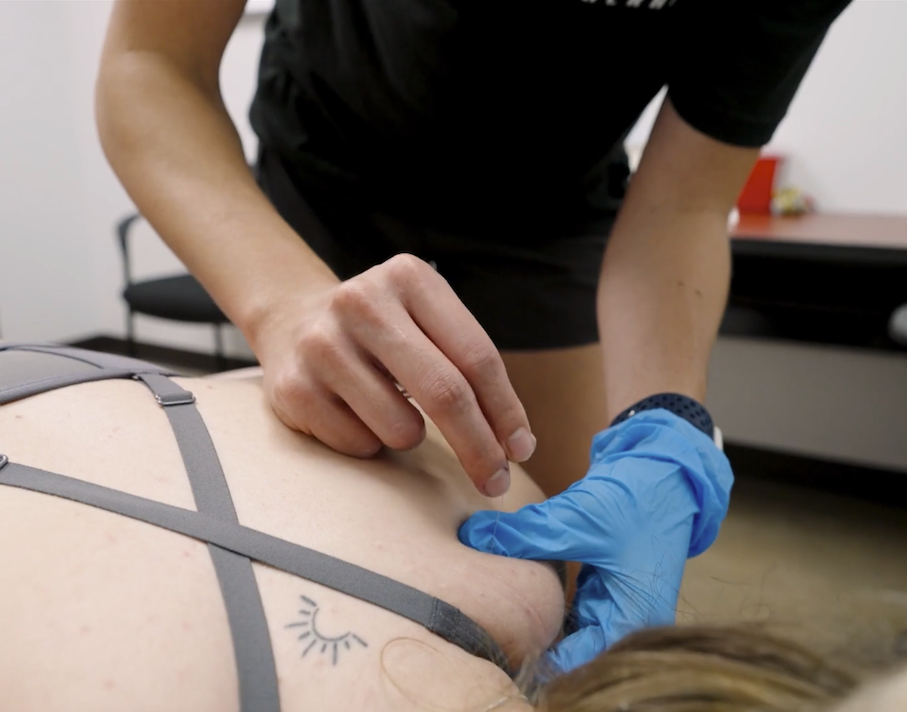
Dry needling uses thin needles to target tender muscle tissue and trigger points. It may help reduce pain and improve movement, especially when paired with exercise. Additional manual therapy options include joint mobilization, soft tissue mobilization, trigger point therapy, and cupping, applied when they fit your individual needs.
Exercise Is the Foundation
Hands-on techniques can open a window of improvement, but exercise locks it in. Your custom program builds strength, control, and capacity so your results last. That is where lasting change happens.
What to Expect When You Start Care at Bulletproof Physical Therapy
Getting started should feel simple and motivating, not confusing.
Texas Direct Access
Under Texas Direct Access, you can begin physical therapy without a physician referral for up to 30 days. If you are dealing with a nagging injury, you do not have to wait for an appointment elsewhere just to get started.
Your First Visit
Your first session is a detailed one-on-one evaluation with a Doctor of Physical Therapy. Your history, sport, and goals are discussed in full. Movement is then assessed and, when appropriate, objective testing is used to build a clear picture of what is going on.
You leave with a plan, a clearer understanding of what is driving your problem, and a custom exercise program sent to your inbox.
Post-Surgery Rehab and Prehab
If you are preparing for surgery or recovering from one, Bulletproof Physical Therapy can help you build strength before the procedure and rebuild afterward. Prehab can set you up for a smoother recovery. Post-surgery rehab then moves you through structured stages until you meet objective return-to-sport goals.
Ready to Get Bulletproof in Houston?
You do not have to settle for rehab that only gets you back to average. Whether you are rebuilding after a CrossFit injury, fine-tuning your running, looking for more power in your golf swing, or restoring your core and pelvic floor after pregnancy, Bulletproof Physical Therapy is here to guide you.
You get 100% one-on-one time with a Doctor of Physical Therapy, objective testing, a custom plan after every session, and care that continues until you surpass your benchmarks from before your injury. Learn more about our team, explore our physical therapy services, or read more training and recovery tips on our blog.
Ready to take the next step? Visit Bulletproof Physical Therapy today and book your first appointment.
